
German Language Course Fees in India: Is Online Really the Cheapest Way to Learn?
Yes, for the course itself. Independent sources confirm online German classes typically run 10 to 20 percent cheaper than offline classroom training in India, since



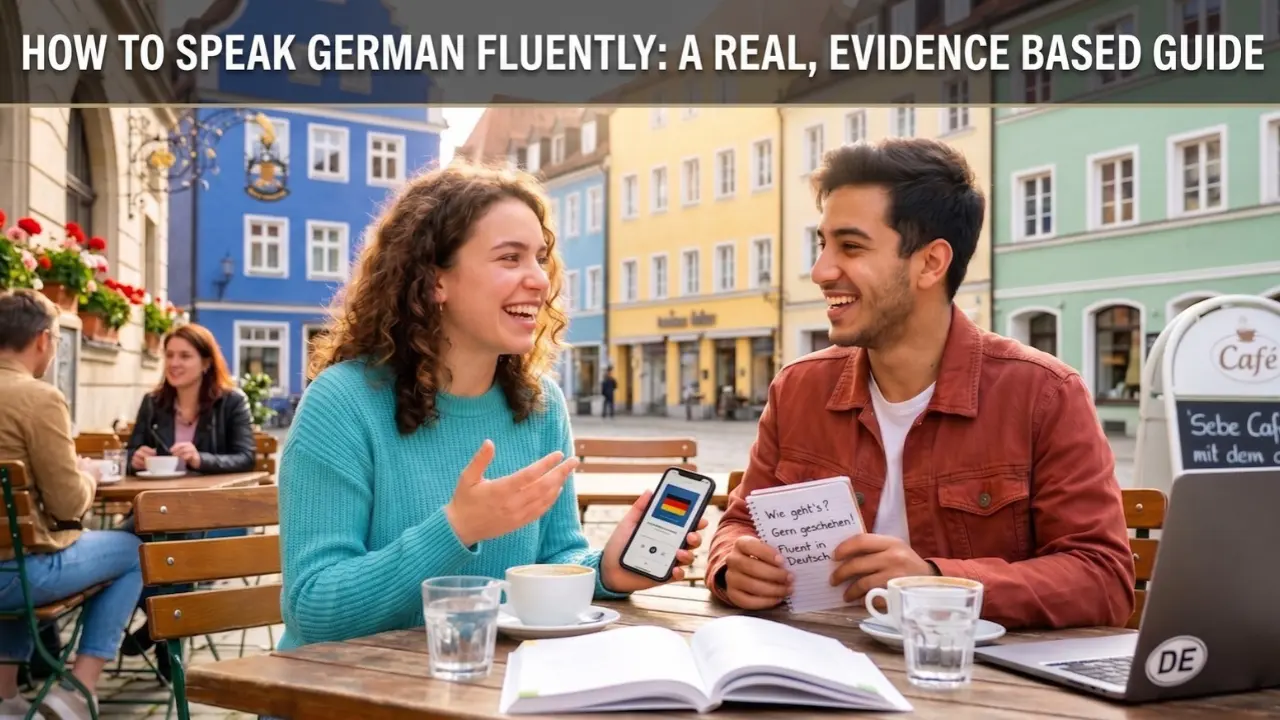
Fluency comes from a specific combination of real listening, active speaking, and consistency, not a single trick or app. This is the real, evidence based answer to how to speak German fluently, and it covers each piece with real, sourced backing rather than generic advice, so you know exactly what actually works and why.
| Building block | What it does |
|---|---|
| Comprehensible input | Listening and reading material you mostly understand, which builds real language intuition |
| Active speaking practice | Producing German yourself, not just recognizing it |
| The shadowing technique | Repeating native speech in real time to build natural rhythm and pronunciation |
| Consistency | Regular, shorter practice sessions beat occasional long ones |
| Realistic timeline | Understanding what fluency actually requires, backed by real data |
Real german fluency means communicating naturally and confidently in real conversations, not speaking without any mistakes. Before getting into how to speak German fluently step by step, it helps to be clear on what the goal actually is. A fluent speaker can hold a conversation, express ideas clearly, and understand most of what is said back to them, even if their grammar is not perfect every single time. This distinction matters, because chasing perfection before speaking is one of the biggest reasons learners stay stuck. Native speakers make mistakes too, and they generally care far more about being understood than about grading your grammar.
Learning how to speak german fluently starting from zero comes down to one core approach, and it applies just as well to someone restarting after a long break. Start with comprehensible input, German you can mostly understand, paired with active speaking from the very first week, not after months of silent study. Add structured grammar and consistent daily practice on top of that foundation, and real fluency builds steadily rather than in sudden leaps. Waiting until you feel ready before speaking is a common mistake, since comfort with speaking only comes from actually doing it, not from more preparation beforehand.
Learning how can I speak german fluently starts with understanding that real fluency rests on four pillars working together, not any single method alone.
The sections below break down exactly how to apply each of these.
Comprehensible input means language you can understand well enough to follow, even if you do not know every single word. This concept, developed by linguist Stephen Krashen, holds that real language acquisition happens when you absorb material that is just slightly above your current level, understandable overall, with enough new material to keep growing. Passive listening to content that is far too advanced does little good, since your brain cannot extract patterns from noise it cannot follow. The practical takeaway is simple: choose podcasts, shows, or graded readers where you understand the large majority of what is said, then let repeated exposure do the rest.
Shadowing means listening to a native German speaker and repeating what they say in real time, matching their pronunciation, rhythm, and intonation as closely as possible. This one technique, when practiced consistently, is often the single biggest factor separating learners who genuinely learn how to speak German fluently from those who stay stuck at reading comprehension alone. It is one of the most effective, evidence backed techniques for improving spoken fluency, since it trains your mouth and ear together, not separately.
To shadow effectively:
This technique works because it forces real time production under natural speech conditions, something reading or app based drills cannot replicate.
Record yourself speaking and play it back, use the shadowing technique with podcasts or videos, and join a free language exchange platform to find a practice partner online. A structured online class with live speaking practice solves this directly, since it guarantees a real partner and real correction every session, rather than leaving you to find one on your own.
Learning how to think in german, rather than translating from English word by word, is one of the biggest bottlenecks to speaking fluently, since constant translation doubles the mental work required for every sentence. Training yourself to think directly in German, even in small ways, removes that extra step over time.
Practical ways to build this habit:
This feels awkward at first, but it becomes automatic with repetition, and it is a genuinely trainable skill, not a talent some learners simply have.
Recognizing a word when you read or hear it is a different skill from being able to produce that word yourself in conversation. Many learners build large passive vocabularies through apps and flashcards, then feel stuck because they cannot actually use those words in real time. Learning vocabulary in full phrases and sentences, rather than isolated word lists, builds active recall far more effectively, since you are practicing the exact skill, retrieval under pressure, that real conversation demands.
No single app makes you fluent on its own, since fluency requires real, corrected speaking practice that apps cannot fully replace. Apps are genuinely useful for vocabulary and grammar drilling between real conversations, but they work best as a supplement, not a replacement for speaking with people.
Real conversation practice is the single most important habit for speaking fluent german well. Waiting until you feel fully prepared before speaking with a real person is one of the most common, and most costly, mistakes learners make. Real conversation practice, even at a very basic level, builds the specific skills that grammar study and vocabulary apps alone cannot, quick recall under pressure, comfort with not understanding everything, and genuine confidence.
A few practical starting points:
Fluent speakers do not consciously calculate every grammar rule mid sentence, the patterns become automatic through repeated use. Understanding how to speak german fluently under real conversational pressure comes down to this same automaticity. The core mechanics behind this, verb position, case usage, and sentence structure, are covered in full in our guides to German sentence structure and basic German grammar. Building genuine speaking fluency depends on knowing those rules well enough that they eventually stop requiring conscious thought.
The real, sourced answer, based on the Foreign Service Institute’s official language difficulty data, is covered in full in our guide to Is German Easy to Learn, which breaks down the real study hour estimates and realistic timelines by level. In short, most consistent learners reach comfortable conversational ability in about six months, with continued progress toward fluency over the following one to two years, depending on practice intensity and consistency.
Short, consistent daily practice beats occasional long study sessions by a wide margin. A realistic 30 to 45 minute daily routine covers everything needed for how to speak German fluently over time:
| Activity | Time | Purpose |
|---|---|---|
| Comprehensible input (podcast, video, reading) | 10 to 15 minutes | Builds passive understanding and vocabulary exposure |
| Active speaking or shadowing practice | 10 to 15 minutes | Trains production and pronunciation |
| Vocabulary or grammar review | 10 minutes | Reinforces patterns and fills gaps |
| Real conversation, when possible | Varies, a few times per week | Builds real world confidence and feedback |
Consistency matters more than intensity when working out how to speak german fluently. A steady 30 minutes a day for months will outperform a single three hour session once a week.
Picking the right mix of resources matters just as much as effort when it comes to how to speak German fluently. The most effective resource mix combines comprehensible input, podcasts, graded readers, and shows with German subtitles, an active speaking outlet, a language exchange partner or a live class, and one structured grammar reference. No single resource covers all three needs at once, which is exactly why relying on just one app or book tends to stall progress after the early beginner stage.
One of the hardest parts of figuring out how to speak German fluently on your own is knowing whether you are actually improving. Tracking real progress means measuring output, not just how much material you have covered. A few honest, concrete signals worth tracking as you work toward speaking German fluently over the following months:
Recording yourself once a month and comparing clips over time is one of the most honest, low effort ways to see this progress directly, since memory alone tends to underestimate real improvement.
Looking across real learner accounts and language acquisition research, a few honest patterns show up consistently among people who genuinely learn how to speak German fluently, as opposed to those who study for years without real progress.
None of these require natural talent or an unusual amount of free time, they are habits, and habits are learnable at any age or starting point.
These are the patterns that most often stall progress for self taught learners.
German has real challenges, including grammatical gender and cases, but it also has consistent, learnable rules and shares significant vocabulary with English, making it genuinely approachable with the right approach.
Fluency is generally associated with the B2 to C1 range on the CEFR scale, where a speaker can handle most everyday and professional conversations naturally, though functional conversational ability starts developing well before that at B1.
Yes, this is a realistic timeline for many consistent learners, particularly with regular speaking practice and structured guidance, though the exact pace depends heavily on study consistency and prior language learning experience.
According to research by linguist Stephen Krashen on second language acquisition, comprehensible input combined with genuine communicative practice is what drives real language development, not grammar memorization alone, a finding that underpins nearly every recommendation in this guide.
This guide covered the real, evidence based path to how to speak fluent german, comprehensible input, active speaking, shadowing, and consistency, rather than shortcuts or hype. Understanding these strategies is a strong starting point. Applying them consistently, especially the real conversation practice that builds genuine speaking confidence, is where most self study efforts actually fall short. That gap is exactly what German Study Path’s live online German classes are built to close. Small groups capped at a fixed number, native teachers providing real, immediate correction as you speak, across every level from A1 through C2, backed by a money back guarantee.
Yes, for the course itself. Independent sources confirm online German classes typically run 10 to 20 percent cheaper than offline classroom training in India, since
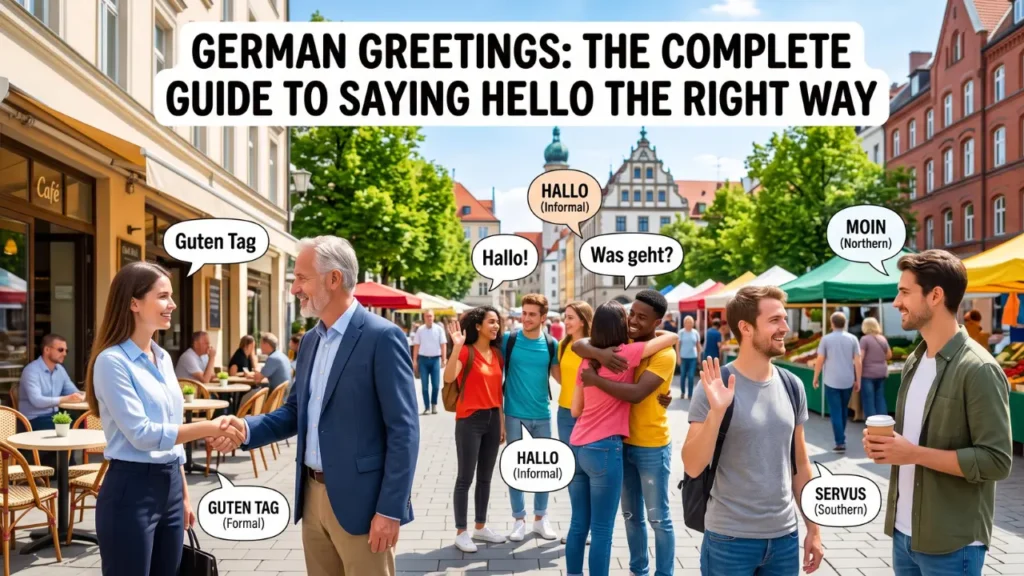
German greetings depend on two things above all else, formality and time of day. Get those two right and nearly every real conversation starts smoothly.
German greetings depend on two things above all else, formality and time of day. Get those two right and nearly every real conversation starts smoothly.
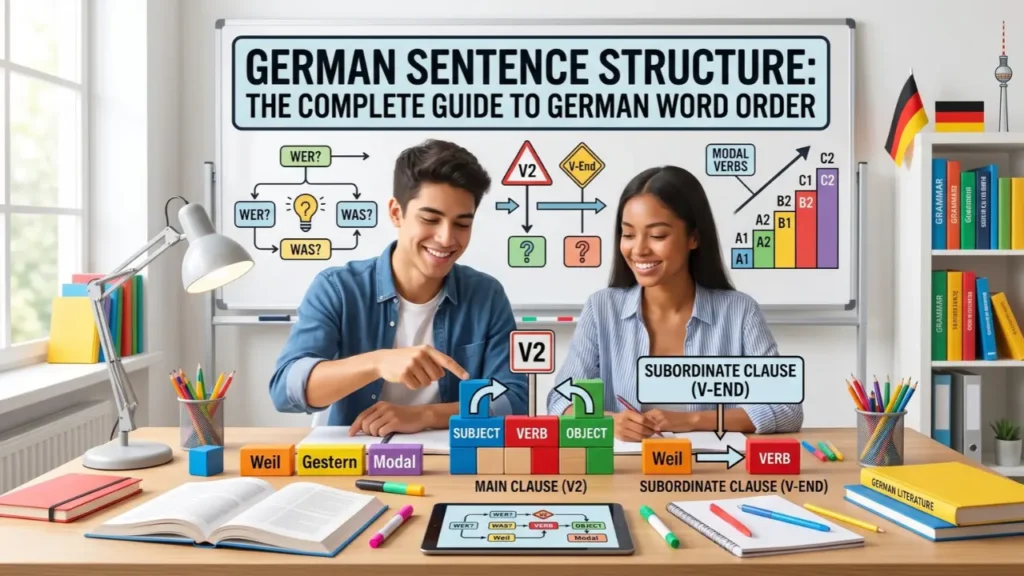
In a German main clause, the conjugated verb is always the second element. Not the second word. The second element, which can be one word